Crypto
Cryptocurrency, blockchain, and digital asset news.
Live updates: Bitcoin flatlines under $76,000 as stock bounce loses steam into the close
The Nasdaq gained just 1.1%, while the S&P 500 only edged higher, and the DJIA lost more ground.
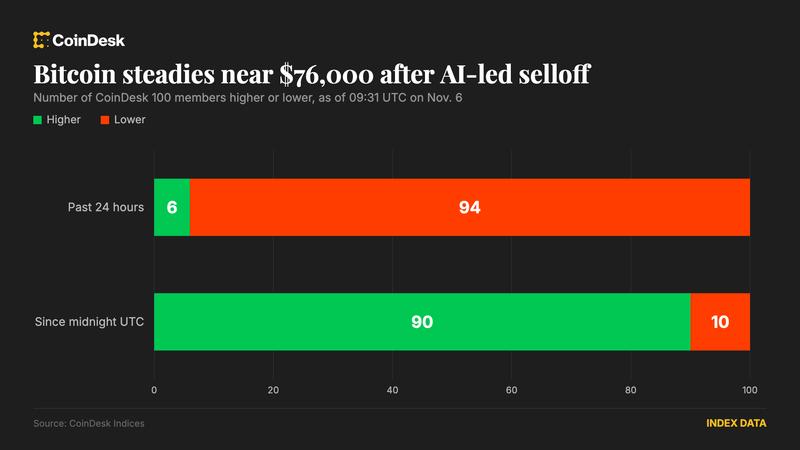
Bitcoin steadies after AI-led selloff as eyes turn to latest U.S. jobs figures
Bitcoin bounced from around $75,200 after Thursday’s AI-led selloff, which drove more than $1 billion in liquidations, as traders await the U.S. jobs report.

Binance hackers had 8-week intrusion window before $6.3B exploit: SEAL
The cybersecurity company flagged similar multi-stage intrusion patterns behind other high-profile crypto heists, including the $388 million Bitget hack.

Bitcoin holds $75K as AI regulation fears see KOSPI halted after 8% crash
Bitcoin consolidated as fears over US AI regulation spread to Asia, causing South Korea to announce measures to calm stock-market volatility.
Greece approves 10% tax on crypto gains starting in 2027
Greece has approved a 10% tax on cryptocurrency gains starting in 2027, with an exemption for investors whose annual net gains do not exceed 500 euros.
GOPAX halts crypto trading, withdrawals to move all assets to cold storage
South Korea’s GOPAX suspended trading, deposits and standard withdrawals after a hacking threat, with manual withdrawals available through support.

Binance’s $6.3B hack leaves questions over hot wallet safeguards
Experts say blockchain records show repeated wallet drains but cannot establish Binance’s internal signing controls or transaction limits.

Bitcoin recovers $76,000 level as ETFs shed $430 million after tech rout
Bitcoin recovered above $76,000 Friday after dropping below that level during Thursday's tech-driven market rout.

Zcash NU7 upgrade goes live, leaves 12,224 ZEC stranded in Sprout pool
Zcash’s NU7 upgrade has rendered about $15 million in legacy Sprout funds unspendable, although a future network upgrade could potentially restore access.

Greece approves 10% tax on crypto gains and 15% levy on DeFi income
Investors will have 12 months to declare past crypto gains without late-filing penalties, though questions remain over crypto-to-crypto swaps.

Hyperliquid Strategies seeks futures registration for perps
The HYPE treasury company spent $785 million on tokens during the quarter and wants to bring Hyperliquid-based perpetual futures to the US.

Bitcoin, Ether ETFs post $530M outflows as election gains evaporate
US spot Bitcoin and Ether ETFs shed a combined $530 million Thursday as Bitcoin fell below $76,000 and US stocks tumbled.

Trump-backed World Liberty Financial plans token buyback after 66% year-to-date slide
The crypto venture may use fees from its USD1 stablecoin reserves to fund token purchases as it seeks to boost governance.

Chainalysis says breach exposed password hashes and live tokens
Chainalysis disclosed password hashes and live tokens were exposed after initially reporting only non-sensitive customer data was accessed.

Zcash’s landmark NU7 upgrade goes live, speeding up private payments
NU7 cuts the target time between blocks to 25 seconds, reduces the work wallets must do to find private payments and sets aside fees for future miners.

Crypto exchanges tout cold storage ratios after Binance attack
Coinbase says it keeps more than 99% of customer assets offline, while Gate reports 88.26% of its total assets are kept in cold storage.

Hyperliquid treasury firm seeking U.S. regulatory nod as a domestic futures platform
The company said it's trying to establish a U.S. "futures commission merchant" with full compliance for activity with U.S. clients, though the timing is uncertain.
Bitcoin developer proposes ‘landmines’ to make quantum thieves lose their own BTC
Anyone trying to move vulnerable bitcoin would have to put up matching collateral, giving prepared owners a chance to take both.