The Russian Defector Who Plundered the Amazon For American Drug Companies
Boris Krukoff was whisper thin, with enormous eyes that erupted out of deep sockets. By the time he started working for the American pharmaceutical company Merck, he was fast becoming one of the premier plant hunters in the tropical world. He knew how to rely on himself in a hard spot and when to lean on others to get things done or to get out of trouble. He also knew when to hide things—plants mostly—from unwanted eyes, whether those of a customs inspector, other explorers, or potential competitors. These were good qualities for a field botanist working in the international plant and drug trade. Krukoff was the ideal person to be Merck’s new plant man in the Amazon, and now its curare hunter.
Born in central Russia in 1898, Krukoff spent most of his early years in the small town of Kosmodemiansk, on the banks of the Volga River. His father was a botanist and likely introduced the young Krukoff to the art and science of specimen collecting. Krukoff studied at the local gymnasium, a combined primary and secondary school, graduating with honors in the spring of 1917. During his last few years at the gymnasium, he spent summers working for the supervisor of Kosmodemiansk’s National Forest, his first foray into a career that would see him exploring the world’s forests. After graduation, he moved on to four months of training at the Alexander Military Academy in Moscow, serving briefly in the 95th Infantry Regiment. He was soon demobilized, returned home, and moved farther down the Volga, to Kazan, where he enrolled in its university to study law.
Not long after arriving at university, his life was upended by the Russian Revolution and civil war. While he was at the military academy in Moscow, the unrest of the “July Days”—a week of armed demonstrations and protests against the provisional government in the national capital of Petrograd (St. Petersburg)—gave a preview of the greater violence that was to come as the Bolshevik Revolution seized the country. For the next five years, Krukoff ’s odyssey crisscrossed Russia, ever farther from his small hometown on the Volga and his rambles in its woods.
In 1918, in the early days of the revolution, Krukoff was drawn again into military service. He fought against the Bolsheviks as part of the White Army and later as a member of the White Navy and Marines. His time in the military included multiple stints working reconnaissance, at one point slipping across the front line to report on the status of the Red Army’s Volga flotilla. These risky assignments led to his capture in 1919 and time as a prisoner of war. He managed multiple escapes from POW camps, at one point being pressed into service in the Red Army as a suspected deserter. The Reds sent him to the front with thousands of other conscripts, most without any weapons. He eventually escaped for good, crossing back to territory controlled by the Whites. He traveled deep into Siberia and rejoined the Russian Admiralty at the city of Omsk. After additional mobilizations and combat, he joined up with the White Navy and its Siberian flotilla at the Pacific port of Vladivostok.
For a botanical hired gun like Krukoff, secrecy was next to godliness.
Krukoff documented his epic in minute detail. It was a practice he’d started as a boy (“An accurate record of my hunting from 1913 to 1918 inclusive”; “My observations of spring 1912 to 1917 in Kosmodemiansk”) and would continue on his long plant-collecting expeditions. He was “a man addicted to organization,” a colleague later recalled. The details are striking: forged passports, escaping a prison barge by hopping from ship to ship, and dodging “Red Magyars and Chinese troops” as he crossed the front lines. He knew how to collect data of many types. Krukoff ’s service in the White Navy ended after the defeated fleet left Vladivostok for refuge in the Philippines. When his fellow sailors and officers received passage from US authorities to San Francisco, Krukoff slipped away again, “seeking a country of my choice.” He worked for a time at a plantation in central Luzon, getting his first glimpse of tropical plants, but soon left for Australia, which Krukoff didn’t like “because of the Labor Government.” He then went to Canada, which he didn’t like either because he “happened to land in the French Canadian part of it.” He eventually settled, by choice it seems, in the United States. “I liked New York.”
Krukoff arrived at Ellis Island on March 29, 1925. Across the Hudson, the city pulsed with life during the boom years of the 1920s. On the Upper West Side, the American Museum of Natural History had on display the bones of a mastodon just uncovered during the excavations of an apartment building. It was offering a ten-dollar reward for any of the thirteen teeth that had gone missing after workers had found the bones. The crisp spring day was marred by a lingering haze over Lower Manhattan, from a fire that had ripped through tenements in an immigrant district called the “neighborhood of all nations.”
Though Krukoff liked it better than French Canada, life in New York meant struggling as a single immigrant with little English, no family, and no money. He spent the summer working odd jobs in Manhattan, usually two at a time. It was a blur of long shifts, hurried meals, and halting conversations in a foreign language. He combined day jobs painting and laying bricks with a night watch as a private security guard. Between shifts he worked on his English at Manhattan’s Evening Elementary School #103. The schedule meant little time for sleep. During one stretch working as a night watchman at a garment factory, he took cat naps on the piles of new clothes between rounds. But he was frugal and the paydays started to add up to something. By the fall, he had saved up enough money and learned enough English to enroll at the New York State College of Forestry in Syracuse. After three years of ferocious study, he graduated cum laude.
Sporting an unusual but impressive résumé as a US-trained forester, seasoned world traveler, and former secret agent, Krukoff started looking for work. Though the Depression hadn’t yet arrived, the 1920s were no longer roaring. “Next to impossible to get a job,” as Krukoff put it. His tactic for handling the job hunt was one he’d later use hunting plants: a targeted search supported by overwhelming force. He thought that his best shot was “to work for some American concern, preferably planting rubber in the tropics.” As part of his employment campaign, he sent three letters to different subsidiaries of a US-based rubber company, Intercontinental Rubber, including one to an obscure Mexican branch.
Somehow they all found their way onto the desk of the president of the company, G. H. Carnahan, based in New York City. Carnahan, a wealthy, Harvard-educated engineer and inventor, had risen through the ranks at Intercontinental Rubber. He had patented methods for processing ore at Guggenheim’s Chilean nitrate mines and for extracting latex from the “guayule” plant, a shrub in the US Southwest and Mexico that was one of the most important sources of rubber in the North American market. Impressed by Krukoff ’s doggedness, Carnahan summoned him to his office in Manhattan for an interview. The meeting confirmed his suspicions: Krukoff was hungry, thorough, and relentless.
Carnahan gave Krukoff a temporary assignment. He wanted to check on another business possibility. Someone had pitched Carnahan on a new method for shelling the hard-seeded nuts of the babassu palm, used for oil and cooking. If the new process worked, it promised major revenues, as the Germans were big consumers of margarine produced from the nuts. But he needed someone on the ground to see if the scheme would fly. He asked Krukoff to go to Brazil to sort it all out. It was meant to test his mettle as a field man.
Neither of the two knew it yet, but the trip would pull Krukoff into a lifelong obsession with the plants and remedies of the Amazon, the world of economic botany, and, before long, the Flying Death.
*
Krukoff shipped off right after graduation from forestry school. For the next decade, he was on plant-hunting and other economic botany expeditions more often than he was in the United States. On the babassu project alone, he spent six months roving the Brazilian northeast, criss-crossing the states of Pará, Maranhão, and Piauí. He put his compulsive data collecting to good use, making lists of field sites, yields, wholesale prices, and potential competitors. By the turn of the new year, he figured he’d collected enough information to satisfy his boss. He left the Brazilian heat and after a long boat ride north arrived in a cold and rainy New York on January 5, 1929.
He immediately headed uptown and hand-delivered his report to Carnahan at the headquarters of Intercontinental Rubber on upper Broadway. The project would be a losing proposition, Krukoff told Carnahan, in part because others had “grossly exaggerated” the supply of the nuts and their geographic range. Other firms were getting lured into the project, blinded to its dangers by the promise of huge profits. They didn’t know the real situation in Brazil. Some had dived in already but quickly folded. Don’t get involved, he told Carnahan.
Krukoff ’s insights drew on his growing botanical expertise and exhaustive on-the-ground surveys, all mixed with a hardheaded pragmatism about supply chains and markets. His cautious report cemented his reputation with Carnahan and the rubber man’s big money associates. It “made me,” Krukoff later recalled with pride.
As a reward, Carnahan sent him back south. Just two weeks after arriving in New York, Krukoff was standing on the docks again, about to board another steamer for the return trip to Brazil. He was going to look at more nut and seed oil possibilities around the state of Pará and the mouth of the Amazon. The pattern continued over the coming years as he was sent by Intercontinental Rubber and other companies to investigate wild plants, plantations, and business ideas across the world. Immediately after the return trip to Pará, he left for California to check on their production of guayule rubber, the latex-producing shrub, and then to investigate locations for cultivating guayule in Chile and Spain. Other trips took him to traditional rubber plantations in Sumatra controlled by subsidiaries of Intercontinental and on return visits to the Amazon.
His connections to Carnahan opened the door to more work, including his first expedition to Africa, when he was “loaned” to the Insular Lumber Company of Philadelphia to investigate types of mahogany in relation to a court case involving trade-name infringement. On these early trips, he deepened his knowledge of tropical botany, his technique as a specimen collector, and his savvy as an expedition leader. He also fell in love with tropical plants. He was particularly taken with the plants of the Amazon basin, especially climbing vines and flowering trees. They became Krukoff ’s botanical specialty and lifelong obsession. His other specialty was tactical. He cleverly combined botanical research and economic opportunity, pursuing multiple scientific goals and revenue streams with each expedition, always looking to maximize the returns from each side of his work. He perfected this model on his third expedition to the Brazilian Amazon.
When he sailed for Brazil in August 1931, while the Gills were polishing up the Hacienda Río Negro in Ecuador, the Depression was wreaking havoc across the Americas. Governments were falling throughout Latin America and being replaced by populist leaders who preached economic independence. In Brazil, Getúlio Vargas was in power and promising a more nationalist agenda after coffee prices had crashed the previous year. Back in the United States, more than 20 percent of workers couldn’t find a job. Krukoff, on the other hand, had managed to cobble together three. The first was collecting plant samples, which he would sell to scientific institutions and herbariums across the United States and abroad. In job two, he did ethnobotanical research on Indigenous fish poisons and medicinal plants for a US company, with an eye toward their commercial value back in the States. Job three was spying on Henry Ford.
By now Krukoff had developed a relationship with the New York Botanical Garden, one of the premier herbariums and botanical research centers in the world. The garden in the Bronx and its curators worked with Krukoff to name and distribute his sets of plant samples and kept copies for their own collections. This collection project, coupled with Krukoff ’s commission to investigate medicinal plants, gave him ideal cover for his side objective: working for the US Rubber Company to spy on the operations of Henry Ford’s 2.5-million-acre rubber concession, a tract more than twice the size of Rhode Island. It bordered Brazil’s Tapajós River, a major tributary of the Amazon that snaked southwest for hundreds of miles from the city of Santarém into increasingly remote jungle. The plantation’s formal name was the Companhia Ford Industrial do Brasil, but it was becoming known far and wide by the name of its model-city-in-construction: Fordlandia. With his massive Brazilian concession, Ford hoped to import his own supply of rubber for operations in the United States, but also to export his vision of worker discipline and labor relations.
Krukoff surveyed the property for weeks, yet only one person seemed to suspect that he was working surreptitiously for US Rubber. Having passed as nothing more than a curious botanist, Krukoff compiled a report that captured the inner workings of Fordlandia in ways that would have made Sam Spade proud. In what was becoming his style, he erred on the side of detail. Krukoff titled the seventy-four pages of single-spaced commercial espionage “Short Notes.” He covered everything from the personalities and aptitude of expat managers (“Although he is rather provincial and is not broadminded, he has a very good head”; “Mr. Davies, an Englishman of middle age, without a personality, suffering from inferiority complex, and unhappy marriage”) to labor relations with Brazilian employees (“I have been told by several people that the [labor] riot was a well organized affair, none of the Americans knew anything about it”; “On the porch are located two ‘punch clocks’ which, in my judgment, are largely responsible for the last riot”) and the challenges of growing rubber in the Americas (“it is very unlikely that in the course of the next 10-12 years they will be able to produce rubber as cheaply as the Oriental plantations”). He reached a prescient conclusion: The plantation approach to rubber cultivation faced enormous challenges in the Amazon basin, despite the equally enormous investments being made by Ford.
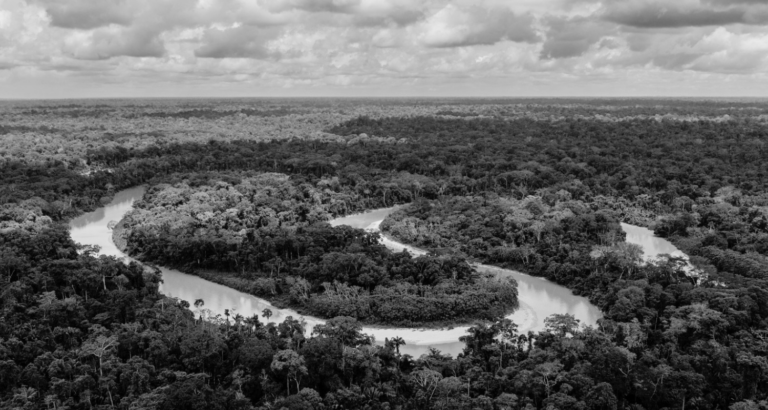
Krukoff ran his multipurpose expeditions on the cheap. They took a toll on his body, but he rarely complained. He thrived in challenging conditions and liked to boast about collecting in places that other botanists wouldn’t dare go. He warmed up for his Fordlandia espionage by collecting in the most remote portions of the central Amazon, on a plateau between the Tapajós and Xingu Rivers. Just to reach the collecting locations from his jumping-off point on the Tapajós, already deep into the Amazon, required over a week of travel. It began with two days in an outboard canoe, followed by a day paddling by hand, and, when the water got too shallow, another four days on muleback. The specimens from these early trips were of such high quality that the New York Botanical Garden quickly found buyers at the finest herbariums in the United States and Europe. Krukoff ’s specimen sheets, the painstakingly collected samples of dried plants and location data, were now prized the world over. They could be found in Berlin, Geneva, Paris, London, Stockholm, and Utrecht, along with all the top gardens and herbariums in the United States.
Krukoff saw no conflict between his scientific research…and the economic possibilities that came along with it.
In a later trip sponsored by Merck, Krukoff went to Bolivia to locate the seeds of cinchona varietals, the trees that produced the antimalarial compound quinine. He was now working with the Brazilian Ricardo de Lemos Fróes, an outstanding plant collector and a seasoned explorer of the Amazon. Krukoff and Fróes lived for weeks in a makeshift camp-site, out of sight from suspicious eyes. It was a rough spot to set up a base, but a good location for collecting cinchona. After weeks of tree hunting in the surrounding forest, Krukoff and Fróes ran out of fresh food. They survived by hunting for bushmeat, gathering wild fruits in the surrounding forest, and rationing the last of their dry goods. While they got an “immense amount of ‘high yielding’ seeds,” they also landed a vicious case of scurvy that nearly made all of Krukoff ’s teeth fall out.
Like his other collecting trips, the Bolivian mission for Merck was full of secrecy, sleuthing, and backroom deals. As they returned to the Bolivian capital at La Paz, Krukoff and Fróes kept certain parts of their trip quiet. The project was part of a bigger US government effort to secure new sources of cinchona and quinine in the Western Hemisphere, and it was illegal to export seeds from Bolivia. He faced jail time if he were caught smuggling, so Krukoff split his payload into three smaller batches. He sent each by a different method. He mailed one north by air express, another he mixed in with his plant specimens, and he gave the third lot to the American Consulate in La Paz, to be sent back to the States with its diplomatic mail. Once gathered and reassembled in the United States, they were sent out to “cooperators” (subcontracted growers) working on the cinchona project.
Krukoff hadn’t prepared for vitamin C deficiency, but he had thought about ways to keep his work under wraps. In his field bag, he carried a pocket-sized edition of Bentley’s Phrase Codes, a manual for hiding messages in cypher. Before leaving, he told one of his contacts at Merck that he would make an addendum to the manual so that Merck could decode any specialized terms. The manual already had entries for “seed(s)” (the base cypher was “pynso”) and “Can sell” (“pyzab”), but nothing for plant cuttings, cinchona, or scurvy. He’d have to make those up on his own. Economic botany was a different kind of battle, but it reminded him of his days doing reconnaissance during the Russian civil war, when he was sending messages across the front lines. For a botanical hired gun like Krukoff, secrecy was next to godliness.
Krukoff was an extreme stoic, sometimes to a fault. Many years later, he didn’t attend the funeral of his wife, a woman friends said he was “devoted to [and] dependent on” for some thirty years, afraid that he’d express “unmanly emotions.” Quick to temper and sometimes cranky, he suffered no fools. He could be rude and brusque, barking orders to his assistants and then filling space with a verbal tic, “heeyum, heeyum, yum,” until he put together his next demand. If he thought someone was getting in his way or not cooperating with his research plans, he’d put them on a personal blacklist. And he liked to be in total control. For decades he refused to have his photo taken, only giving in when a passport or visa required it.
But he had a few chinks in his armor. When Krukoff “became slightly unbearable in autocratic behavior,” a trusted colleague recalled, “his crusty exterior was readily penetrated by a sharp verbal puncture to his dignity. On these occasions, after a moment of sputtering, he would break into an apologetic laugh, a quite boyish expression flickering across his normally unexpressive face.”
Krukoff saw no conflict between his scientific research—the hard work of collecting, classifying, and analyzing plant specimens—and the economic possibilities that came along with it. Quite the opposite, he considered research and business a potent combination.
In 1932, Krukoff solidified this botanical one-two punch. He formed a business venture with his original patron Carnahan and a third partner, G. W. Cole. Cole was a Wall Street man whose company had sponsored Krukoff ’s ethnobotanical research during the Fordlandia trip. Along with Carnahan, their common interest was money. Lots of it, ideally. They wanted to pursue whatever products could be derived from the forests of “Tropical America.”
They called it a “syndicate.”
______________________________
Excerpted from The Flying Death: Poison, Plunder, and the Quest for a Miracle Medicine in the Amazon by Matt O’Hara. Published by Farrar, Straus and Giroux. Copyright © 2026 by Matt O’Hara. All rights reserved.
BlogZone shows headlines and summaries from public news feeds. The full story is published by Literary Hub.
Read the full story at Literary Hub →Enjoyed this?
Get more stories like this — and write your own — in the BlogZone app.